No products in the cart.
Event Videography in Dubai: How to Plan the Shoot
Event videography in Dubai starts long before the cameras begin recording. Whether you are organising a corporate conference, business exhibition, product launch, awards ceremony, or networking event, a successful video requires careful planning, a clear filming schedule, and coordination between your event team and production crew.
Working with professional videography and photography services can help you capture important speeches, audience reactions, brand experiences, and memorable moments. However, even an experienced videographer needs a detailed brief, a prioritised shot list, and a clear understanding of your event’s objectives.
The footage can also support future marketing campaigns. From highlight reels and event recaps to short-form content for social media advertising, planning your deliverables before the shoot helps ensure the right footage is captured.
This guide explains how to plan an event video shoot in Dubai, including scheduling, camera coverage, venue requirements, equipment, budgeting, permissions, post-production, and the essential details to discuss with your videographer.
Why Is Event Videography Important for Dubai Businesses?
Professional event video production helps businesses document important occasions, communicate key messages, and create visual content for audiences who could not attend.
A well-produced event video can serve several purposes:
- Brand visibility: Showcase your company’s presence at conferences, exhibitions, and corporate gatherings.
- Event promotion: Create highlight videos that help communicate the experience of an event.
- Corporate communication: Share speeches, announcements, and presentations with employees or stakeholders.
- Social media content: Produce short clips, interviews, and behind-the-scenes footage.
- Event documentation: Preserve important moments for internal records or future reference.
- Customer engagement: Share authentic experiences, product demonstrations, and audience interactions.
Different objectives require different filming approaches. A full conference recording, for example, needs reliable audio and continuous coverage, while a promotional highlight video depends more heavily on visual variety, storytelling, and atmosphere.
1. Define the Purpose of Your Event Video
Before booking a videographer, decide what the final video should accomplish and where it will be published.
Identify Your Target Audience
Consider whether your video is intended for employees, business partners, potential clients, event attendees, or the wider public.
For example, a corporate event video intended for internal communication may prioritise keynote presentations and leadership messages. A promotional video designed to attract future attendees may focus on energetic moments, networking, audience participation, and the overall event experience.
Ask these questions before production:
- Who will watch the finished video?
- What should viewers understand or remember?
- Where will the video be published?
- Which speakers, products, or activities must appear?
- Will the footage be used for future marketing?
Decide Which Videos You Need
One event can generate multiple deliverables, but each should be planned before filming.
| Video Type | Purpose | Recommended Content |
|---|---|---|
| Event highlight video | Summarise the experience | Key moments, atmosphere, speakers, and guests |
| Full event recording | Document presentations | Continuous stage coverage and clear audio |
| Social media reels | Share short promotional content | Engaging moments, reactions, and visual details |
| Speaker interviews | Communicate expertise | Short interviews and important insights |
| Promotional recap | Support future event marketing | Event scale, atmosphere, and audience experience |
Agree on video lengths, aspect ratios, languages, captions, and delivery formats before the event. Different platforms may require different framing, so the crew should know whether horizontal, vertical, or both types of footage are needed.
2. Create a Detailed Event Videography Shot List
An event videography shot list identifies the important moments that the production team needs to capture.
It helps videographers prepare suitable equipment, choose camera positions, and prioritise coverage when multiple activities happen at the same time.
Essential Shots for Corporate Events
Depending on your event format, consider including:
- Venue establishing shots: Exterior, entrance, reception, and main event space.
- Branding details: Event signage, sponsor logos, displays, and branded materials.
- Guest arrivals: Registration, greetings, and networking moments.
- Opening ceremony: Introductions, announcements, and welcoming speeches.
- Keynote presentations: Important speakers and stage activities.
- Audience reactions: Engagement, applause, questions, and interactions.
- Product demonstrations: Presentations, launches, and hands-on experiences.
- Interviews: Speakers, organisers, executives, or approved participants.
- Closing moments: Awards, final announcements, celebrations, and group photographs.
Prioritise Must-Have and Optional Shots
Not every shot has equal importance. Separate essential footage from additional coverage.
| Shot | Priority | Production Notes |
|---|---|---|
| Opening keynote | Essential | Continuous recording and reliable audio |
| Product launch | Essential | Capture the main reveal and audience reaction |
| Executive interview | Essential if scheduled | Reserve a quiet location |
| Guest networking | Supporting | Capture natural interactions |
| Venue details | Supporting | Film before guest areas become crowded |
| Decorative close-ups | Optional | Capture when the schedule allows |
Share the shot list with the videographer before the event. Include the names of important people, scheduled activities, and any moments that cannot be repeated.
3. Build a Filming Schedule Around the Event Programme
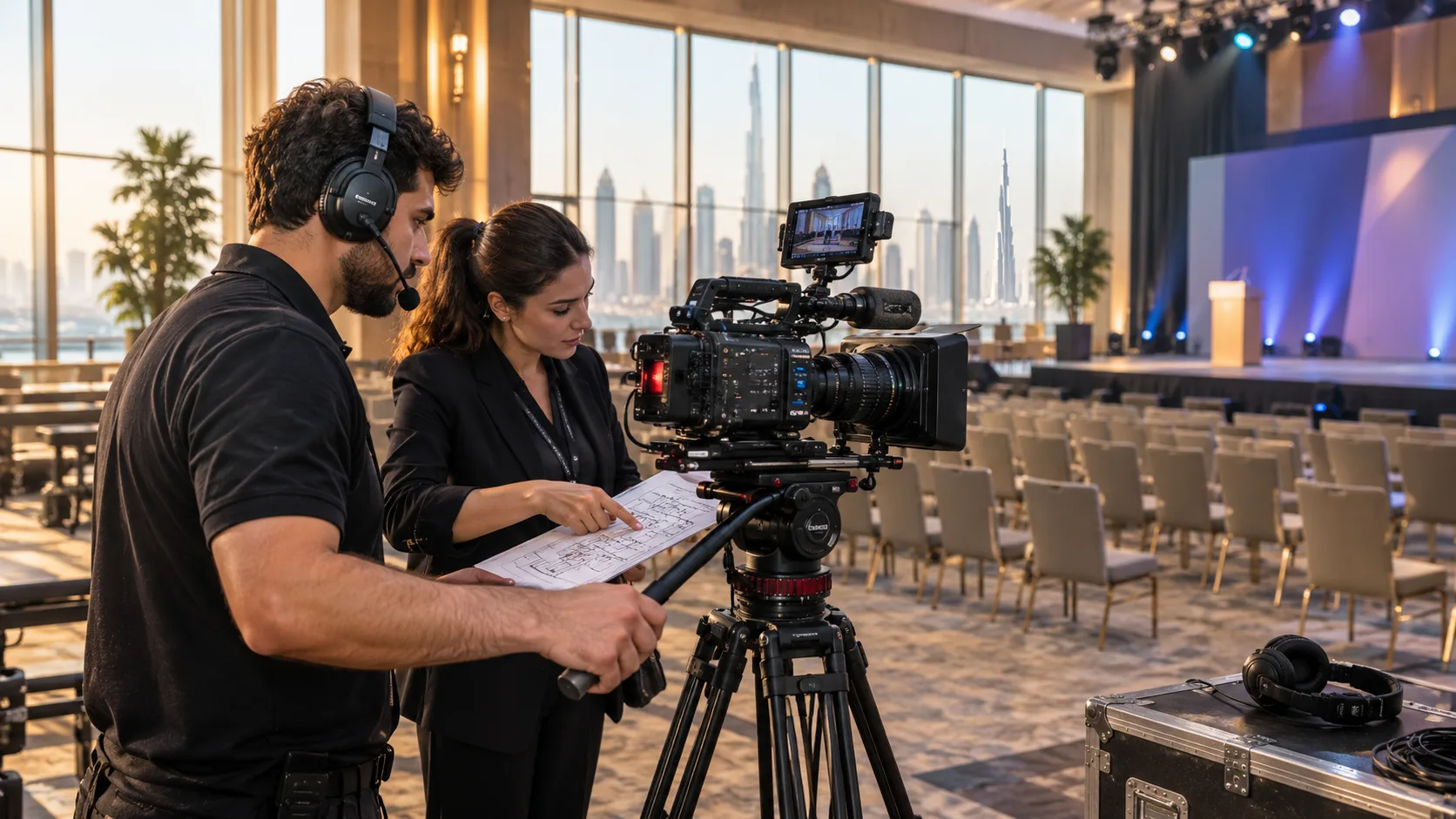
A clear filming schedule allows the crew to anticipate important moments and prepare for transitions between event activities.
Prepare a Run of Show
Your event’s run of show should include:
- Event start and finish times.
- Venue access and crew arrival times.
- Registration and guest arrival periods.
- Speaker names and presentation schedules.
- Breaks and networking sessions.
- Interview appointments.
- Product launches and special announcements.
- Closing activities and equipment breakdown.
Share the latest approved version with your videographer and appoint someone responsible for communicating changes.
Example Event Video Shoot Schedule
The following is an illustrative schedule for a one-day corporate event. Adjust the timing to match your actual programme.
| Time | Activity | Video Coverage |
|---|---|---|
| 8:00 AM | Crew arrival and setup | Equipment checks and venue establishing shots |
| 9:00 AM | Guest registration | Arrivals, branding, and networking |
| 10:00 AM | Opening keynote | Speaker and audience coverage |
| 11:30 AM | Product presentation | Demonstration and reactions |
| 1:00 PM | Networking break | Guest interactions and interviews |
| 2:30 PM | Panel discussion | Multi-speaker coverage and audio |
| 4:00 PM | Closing activities | Final speeches and event highlights |
Allow time for movement, equipment checks, and unexpected delays. A schedule without any flexibility can cause important shots to be missed when a session runs late.
4. Check Your Dubai Event Venue Before Filming
Venue conditions influence camera placement, lighting, sound recording, and crew movement.
For event videography in Dubai, discuss filming arrangements with the venue before confirming your final production plan.
Confirm Access and Venue Restrictions
Ask the venue manager about:
- Filming access and approved areas.
- Crew entry and equipment loading procedures.
- Available setup and breakdown times.
- Camera positions and tripod restrictions.
- Access to electricity and audio systems.
- Lighting limitations and safety requirements.
- Restrictions on recording guests or specific activities.
- Any additional permissions required for the planned production.
A venue booking does not necessarily establish permission for every filming activity. Clarify what has been approved and who is responsible for any additional arrangements.
Visit the Venue or Review Its Layout
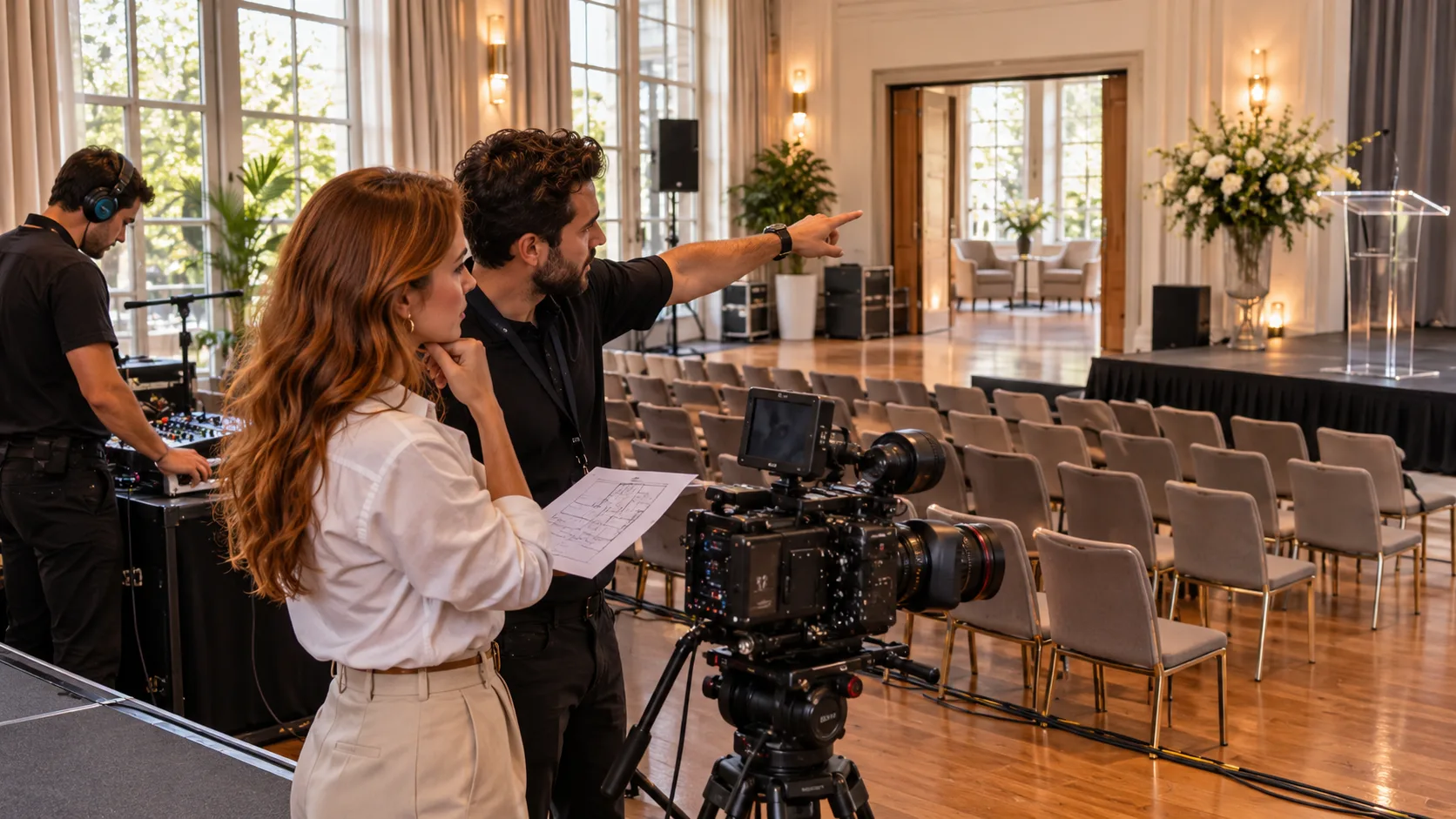
Where practical, arrange a location walkthrough with the videographer.
Identify the main stage, audience seating, interview areas, entrances, and networking spaces. Review possible camera positions and how the crew can move without disturbing guests or blocking important sightlines.
For larger conferences, consider how the crew will move between separate halls or simultaneous sessions.
Prepare a Backup Filming Location
For scheduled interviews or important announcements, identify an alternative recording area.
A planned interview room may become noisy, crowded, or unavailable. Having a suitable backup location can help prevent delays and reduce unnecessary disruption.
5. Choose the Right Event Videographer in Dubai
Hiring an event videographer in Dubai involves more than reviewing an attractive portfolio.
Look for experience with events similar to yours, reliable planning practices, and a clear production process.
Review Relevant Event Videography Experience
Ask potential providers to show examples of corporate events, conferences, product launches, or other relevant productions.
When reviewing their work, consider:
- Clarity of recorded speech.
- Coverage of important moments.
- Camera stability and composition.
- Lighting and image quality.
- Editing pace and storytelling.
- Brand representation.
- Suitability for your intended distribution channels.
A visually impressive promotional reel does not necessarily demonstrate experience in continuous conference recording. Compare examples that match your actual needs.
Ask About the Production Team
The number of videographers required depends on the event layout and filming objectives.
A simple presentation may be manageable with a smaller team, while a conference with simultaneous sessions, interviews, and audience coverage may need multiple operators.
Discuss whether the proposed team can cover essential moments happening at the same time.
Clarify the Videography Package
Before confirming a booking, request a written description of the services included.
Important questions include:
- How many hours of coverage are included?
- How many camera operators will attend?
- Will interviews and stage presentations be recorded?
- Is audio recording included?
- How many edited videos will be delivered?
- Are vertical social media versions included?
- How many revision rounds are provided?
- What is the expected delivery schedule?
- Are raw footage files included or available separately?
A clear agreement helps prevent misunderstandings about coverage, editing, and final deliverables.
6. Plan Cameras, Lighting, and Audio Recording
Professional event videography requires equipment selected according to the environment and the final video requirements.
Choose a Camera Setup That Matches the Event
Consider whether the production requires a fixed camera for uninterrupted presentations, a mobile camera for atmosphere and interactions, or multiple angles for important stage moments.
For a keynote speech, a fixed position can support continuous coverage while another camera captures audience reactions or additional perspectives.
For a networking event, mobile coverage may be more important than a stationary stage setup.
The crew should select equipment based on the event rather than assuming that more cameras automatically produce better results.
Prioritise Clear Event Audio
Audio is particularly important when filming speeches, interviews, panels, and presentations.
Discuss how the production team will access microphones or venue sound feeds. Ask whether a backup audio recording method is appropriate for important sessions.
Before the event begins, check:
- Microphone availability and placement.
- Access to the venue’s audio mixing system.
- Recording levels and sound quality.
- Background noise near interview areas.
- Coordination with the event’s technical team.
- Backup arrangements for essential recordings.
A visually strong video can still be difficult to use if important dialogue is unclear.
Evaluate Venue Lighting
Corporate venues can have challenging lighting conditions, including dark audience areas, bright stage screens, changing spotlights, and mixed colour temperatures.
Share the event’s lighting plan with the videographer whenever possible.
For interviews, select a location with suitable lighting and minimal distractions. Confirm whether supplementary lighting is permitted and can be positioned safely.
7. Understand Event Filming Permissions in Dubai
Before filming an event, distinguish between permission to organise the event, permission to access the venue, and any requirements applying to the filming activity itself.
Do You Need a Filming Permit for an Event?
The Dubai Film and TV Commission’s published FAQ identifies events, weddings, press conferences, educational filming, and personal-use filming among scenarios that do not require its filming permit.
However, this should not be interpreted as unrestricted permission to film anywhere in Dubai. Venue policies, location-specific conditions, broadcasting activities, commercial production arrangements, or other applicable requirements may need separate consideration.
For example, a corporate event recap and a separately staged commercial advertisement may involve different production arrangements.
Confirm the requirements for your specific shoot with the appropriate authorities and venue representatives.
Check Event and Venue Approvals Separately
Some events in Dubai require their own event permits. These are separate from the question of whether an individual filming activity requires a filming permit.
Event organisers should verify applicable arrangements with the venue and Dubai’s relevant event authorities.
Manage Attendee Privacy and Filming Consent
Plan how attendees and speakers will be informed about filming and how recorded material will be used.
For interviews and other identifiable participant contributions, confirm the permissions and releases appropriate to the intended use.
Coordinate with the organiser to identify any restricted areas, participants who should not be filmed, or sensitive sessions.
Requirements depend on the production and circumstances, so seek appropriate guidance where necessary.
8. Budget for Event Videography in Dubai
The cost of event video production in Dubai depends on the coverage required, event duration, production complexity, and final deliverables.
There is no reliable universal price for every event. A short corporate gathering and a multi-day exhibition require different resources.
Factors That Affect Event Videography Costs
- Event duration: The number of filming hours or days.
- Crew size: The number of videographers and supporting specialists.
- Camera requirements: Single-camera or multi-camera coverage.
- Locations: Multiple rooms, venues, or filming areas.
- Audio requirements: Speeches, interviews, or multi-speaker recording.
- Editing: Highlight films, full recordings, and additional versions.
- Delivery requirements: Formats, captions, languages, and deadlines.
- Additional arrangements: Special equipment, access, or approved production requirements.
Compare Quotes Using the Same Production Brief
Ask each videography provider to prepare an estimate based on the same event schedule, shooting requirements, and deliverables.
Compare what is included rather than looking only at the total price.
A lower quote may exclude additional camera coverage, interview editing, raw footage, or social media versions that another proposal includes.
Allow for Contingencies
Unexpected changes can affect the agreed production scope.
Discuss how the videography team will handle:
- Event delays and extended coverage.
- Speaker schedule changes.
- Restricted or unavailable filming areas.
- Technical interruptions.
- Additional interviews.
- Requests for extra edited videos.
Clarify the process for approving additional work or costs before production begins.
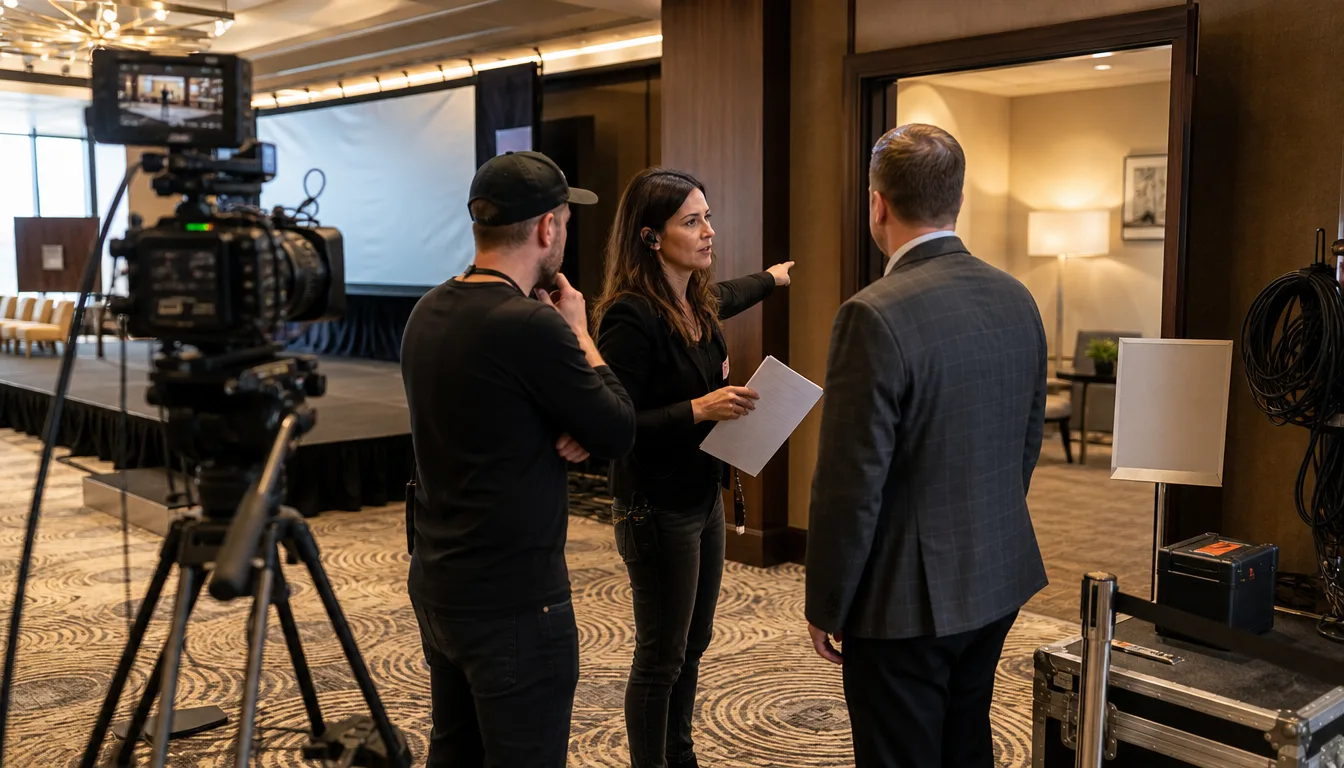
9. Coordinate the Event Shoot Day
Good preparation should make production easier during the actual event.
Assign One Main Production Contact
Choose a person from the event team who can communicate directly with the videographer throughout the day.
This person should know the event schedule, speaker availability, filming priorities, and venue arrangements.
If something changes, they can communicate the update quickly and help the crew adjust its coverage.
Complete a Pre-Shoot Checklist
Before guests arrive, confirm the following:
- The videography crew has entered the venue.
- All required filming areas are accessible.
- Camera and audio equipment has been tested.
- The final event schedule has been shared.
- Essential shots and speakers are confirmed.
- Interview locations are prepared.
- The venue’s technical contact is available.
- Required permissions and participant arrangements have been checked.
- Backup plans for important coverage are understood.
Keep the Crew Updated During the Event
Live events rarely follow every scheduled minute perfectly.
If a speaker arrives late, a session changes rooms, or a product demonstration starts earlier than expected, the event contact should inform the videography crew immediately.
Prioritise moments that cannot be repeated before optional atmosphere or decorative footage.
10. Plan Post-Production and Video Delivery
The filming day is only one part of the event videography process. Editing and delivery determine whether the footage becomes useful content for your business.
Agree on the Editing Style
Discuss whether the final video should feel cinematic, energetic, documentary-style, or formal and corporate.
Consider the intended audience and platform when deciding on music, transitions, titles, captions, pacing, and brand elements.
For a highlight video, the editor may focus on communicating the event’s atmosphere and important moments. For a conference recording, clarity and continuity may be more important than dramatic editing.
Set a Clear Review Process
Assign one person to collect feedback from relevant stakeholders.
Rather than sending conflicting instructions from several departments, consolidate comments into a clear review document.
Check names, speaker titles, event branding, factual information, and the accuracy of any statements included in the video.
Confirm Final Deliverables
Before approving the project, verify that all agreed video files have been delivered.
A final delivery checklist may include:
- Main event highlight video.
- Full presentation recordings, if requested.
- Short-form social media edits.
- Speaker or executive interviews.
- Approved subtitles or captions.
- Correct aspect ratios and export formats.
- Any agreed raw footage or project files.
Confirm how long the production company will retain project materials and whether you have the necessary usage arrangements for future content.
Common Event Videography Mistakes to Avoid
Several avoidable problems can affect the quality and usefulness of event footage.
- Booking too late: Leaving insufficient time for planning, access checks, and production coordination.
- Not preparing a shot list: Relying on the crew to identify every important moment without guidance.
- Ignoring audio: Recording speeches without confirming suitable sound arrangements.
- Overlooking the venue: Failing to check access, lighting, camera positions, and filming restrictions.
- Requesting multiple formats too late: Assuming every final version can be created from footage not planned for that purpose.
- Unclear responsibilities: Having no single contact responsible for production decisions.
- Undefined deliverables: Not agreeing on editing, revisions, delivery formats, and deadlines.
- Skipping contingencies: Having no alternative plan for schedule changes or unavailable filming areas.
Frequently Asked Questions About Event Videography in Dubai
When Should I Book an Event Videographer in Dubai?
Begin contacting videographers once the venue, event date, and general programme are established. Earlier planning is particularly useful for complex events involving multiple filming locations, interviews, or simultaneous sessions.
How Many Videographers Do I Need for an Event?
The number depends on the event’s size, layout, and coverage requirements. A single-room presentation may need fewer operators than a conference with several simultaneous sessions. Discuss essential camera angles and overlapping activities with the production team.
What Should an Event Videography Brief Include?
Include the event objective, target audience, schedule, venue, essential shots, speaker information, crew access arrangements, required deliverables, and approval process.
How Much Does Event Videography Cost in Dubai?
Pricing depends on filming hours, crew size, equipment, event complexity, editing requirements, and final deliverables. Request a detailed project estimate based on your specific event rather than relying on a generic price.
Do I Need Permission to Film a Corporate Event in Dubai?
Requirements depend on the event, venue, filming activity, and intended use. The Dubai Film and TV Commission lists events among filming scenarios exempt from its filming permit, but venue permissions and other applicable requirements must still be checked separately.
Can One Event Shoot Produce Multiple Social Media Videos?
Yes, provided the required formats and footage are planned appropriately. Tell the videographer in advance if you need vertical reels, interviews, promotional clips, or other edits in addition to the main event video.
What Happens After the Event Video Shoot?
The production team reviews the footage, edits the agreed videos, adds approved branding or audio elements, and prepares versions for review. Final files are delivered according to the project’s agreed specifications and approval process.
Conclusion: Plan Your Dubai Event Video Shoot With Confidence
Successful event videography in Dubai depends on clear objectives, practical scheduling, a prioritised shot list, and effective communication between organisers, venues, and production teams.
By preparing your filming brief early, confirming venue arrangements, planning audio and camera coverage, and agreeing on post-production deliverables, you can make better use of the footage captured during your event.
At Bargojet Studio, we provide creative visual production for businesses, including event coverage, brand storytelling, and promotional video content.
Planning a corporate conference, product launch, exhibition, or business gathering in Dubai? Share your event objectives, schedule, and production requirements with Bargojet Studio to discuss an event videography approach suited to your project.