No products in the cart.
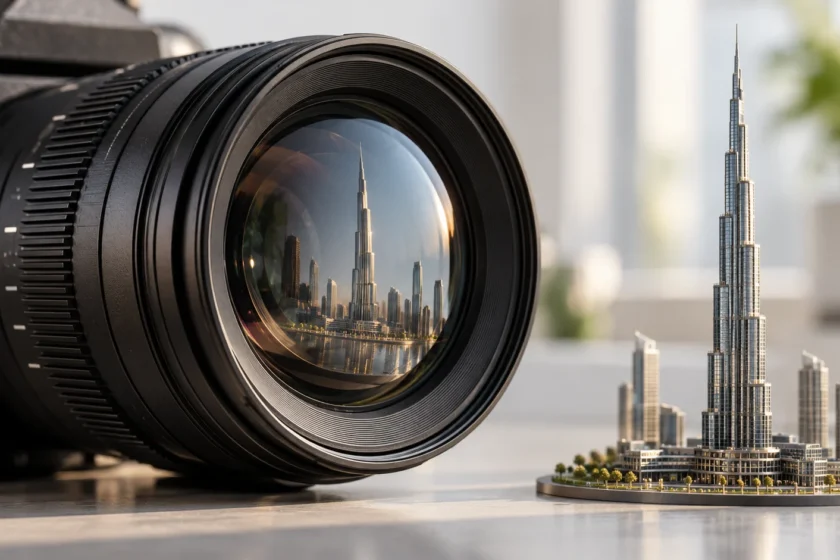
AI Video in Dubai: Can AI Replace a Video Shoot?
AI video in Dubai is changing how brands approach commercial video production. From cinematic social media ads to imaginative product campaigns, AI-generated visuals can help businesses explore creative ideas without filming every scene. But can artificial intelligence genuinely replace a professional video shoot?
The answer depends on what your audience needs to see. For conceptual advertisements and synthetic environments, AI content creation services may offer an effective production approach. However, projects involving real products, authentic customer experiences, employees, or physical locations may still require professional videography and photography services.
For businesses developing video advertising campaigns, the most effective solution may combine AI-generated visuals, real footage, and professional editing. In this guide, we compare AI video production with traditional filming, explain where each method works best, and explore how Dubai businesses can choose the right approach for their marketing goals.
Can AI Video Replace Traditional Filming in Dubai?
Yes, AI video can replace a traditional shoot for certain types of content, but not for every project. The deciding factor is whether the video needs to represent real people, products, locations, or events accurately.
For example, an imaginative commercial featuring a futuristic Dubai skyline can be developed using generated imagery. A customer testimonial featuring an actual client, however, depends on genuine footage and authentic statements.
Businesses generally have three production options:
- Fully AI-generated video: Content created primarily through generative AI rather than filming new footage.
- Traditional video production: Footage captured using cameras, lighting, crews, locations, and real subjects.
- Hybrid video production: A combination of real footage, AI-generated elements, animation, and professional post-production.
Choosing between these approaches requires an understanding of the creative brief, authenticity requirements, budget, production schedule, and final distribution channels.
What Is AI Video Production?
AI video production is the process of creating or transforming video content using artificial intelligence systems. Depending on the tools and workflow, it may involve generating moving scenes from text instructions, animating existing images, modifying footage, or supporting editing and post-production.
How Does AI-Generated Video Work?
A typical AI video production workflow begins with a creative idea and a clear description of the required scenes.
The production team develops a script, visual references, and a storyboard. AI tools may then generate short sequences that are selected, refined, and assembled into a complete video.
The process can include:
- Developing the creative concept and campaign objective.
- Writing the script and planning individual scenes.
- Preparing visual references and brand guidelines.
- Generating and selecting suitable video sequences.
- Correcting visual inconsistencies and refining movements.
- Editing the footage and integrating audio or voice-over.
- Reviewing the finished content for quality and accuracy.
- Exporting the required versions for advertising or social platforms.
AI generation is only one part of this workflow. Creative direction, storytelling, sound design, editing, and quality control remain essential to producing professional results.
What Is the Difference Between AI-Generated and AI-Assisted Video?
A fully AI-generated video uses synthetic visuals as its primary source material. An AI-assisted production, by contrast, may begin with real camera footage and use AI for selected tasks such as visual enhancement, scene preparation, editing assistance, or content adaptation.
These approaches should not be confused. Using AI during editing does not mean the people, locations, or products shown in the original footage were artificially generated.
When Can AI Video Replace a Real Video Shoot?
AI-generated content is particularly useful when the central message can be communicated without documenting a real-world event or physical subject.
Creative Advertising and Cinematic Brand Videos
Brands can explore imaginative concepts, stylised environments, and visual storytelling that would otherwise require complex practical production.
For example, a luxury brand could develop a conceptual advertisement featuring an atmospheric desert landscape, a futuristic environment, or an abstract visual interpretation of its identity.
These applications work best when the imagery is clearly creative rather than presented as factual evidence about a specific product or service.
Social Media Reels and Short-Form Campaigns
AI video can also support the development of short-form content for Instagram, TikTok, YouTube Shorts, and other visual platforms.
Potential applications include:
- Concept-driven promotional reels.
- Animated brand storytelling.
- Visual backgrounds for campaign messages.
- Creative teasers for product launches.
- Stylised seasonal advertising.
- Alternative visual concepts for campaign testing.
However, successful social media content depends on more than visual novelty. Videos still need a clear message, appropriate pacing, strong creative direction, and relevance to the intended audience.
Concept Visualisation and Campaign Prototypes
Before investing in a full commercial shoot, businesses may use AI to explore potential scenes, camera perspectives, environments, and campaign ideas.
This can help creative teams communicate a proposed concept and gather feedback before committing to the final production method.
A generated prototype should still be treated as a visual proposal, not a guarantee that the final footage can reproduce every detail.
AI Video vs Traditional Video Production: Key Differences
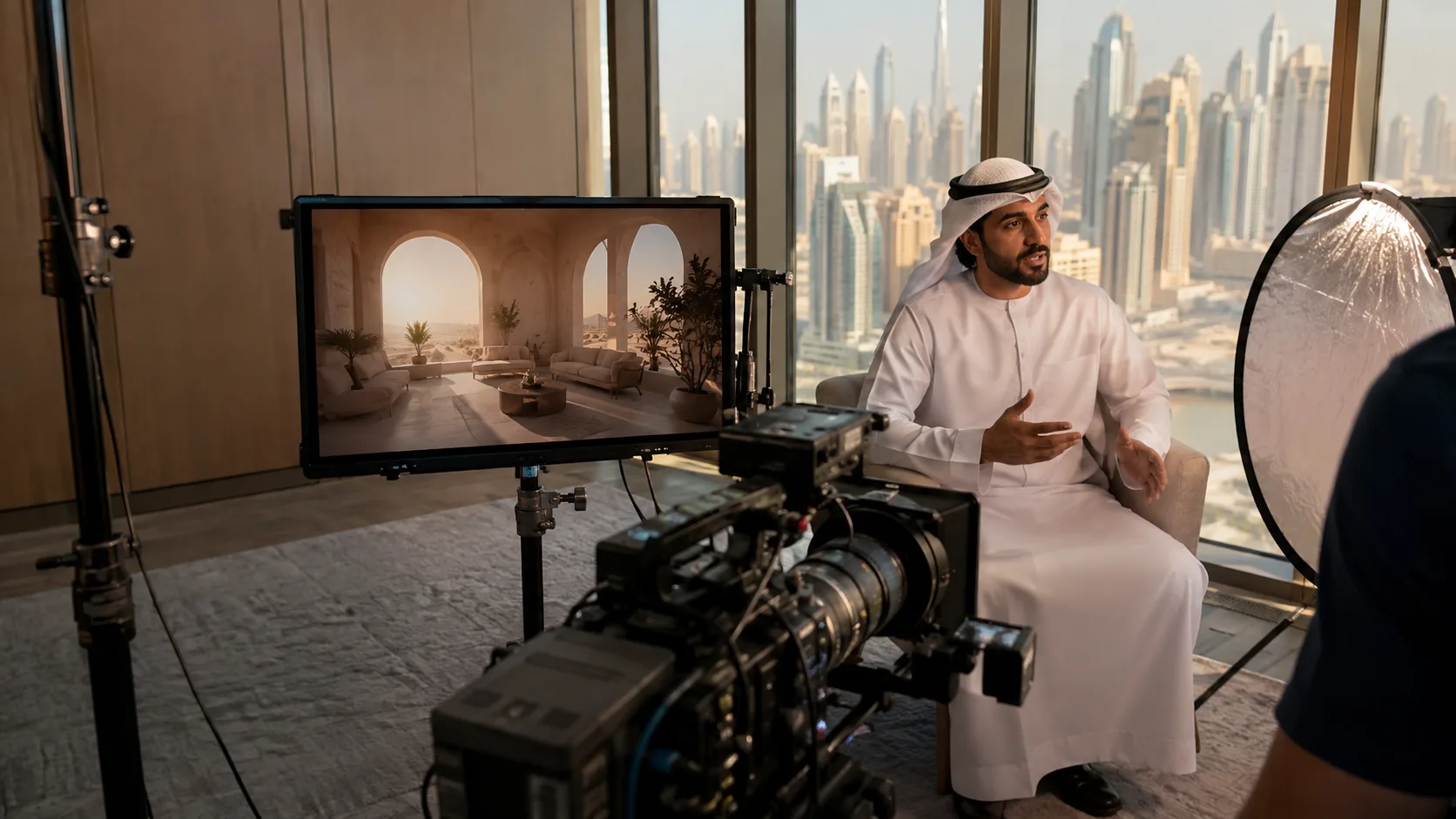
When comparing AI video production in Dubai with a conventional shoot, evaluate both methods against the same project requirements.
| Comparison | AI Video Production | Traditional Video Shoot |
|---|---|---|
| Production method | Generated or transformed digital visuals | Recorded footage of real subjects |
| Real-world authenticity | Requires verification when depicting reality | Directly captures actual subjects and events |
| Creative environments | Useful for imaginative or synthetic scenes | May require locations, sets, or visual effects |
| Product accuracy | Requires careful validation of details | Can capture the actual product |
| Visual consistency | May require repeated generation and correction | Managed through filming and editing continuity |
| Revisions | May require regeneration and additional editing | May require re-editing or reshooting |
| Cost | Depends on generation, editing, rights, and revision scope | Depends on crew, equipment, locations, editing, and permits |
| Best suited to | Conceptual campaigns and synthetic storytelling | Real people, products, locations, and events |
Visual Quality and Creative Control
Both AI-generated and traditionally filmed videos can support high-quality creative work, but they offer different forms of control.
Traditional filming allows a production team to direct real performances, lighting, physical products, and camera movements. AI generation can offer flexibility when exploring imagined environments or alternative artistic concepts.
However, AI-generated scenes may introduce inconsistencies in faces, movement, product details, lettering, object interactions, or continuity between shots.
These issues should be checked during production rather than assuming every generated sequence will be ready to publish.
Production Time and Revisions
AI can remove some location, equipment, and shooting requirements from a project. Nevertheless, prompt development, scene selection, regeneration, editing, and client approvals can still require substantial work.
Traditional filming involves preparation and physical production, but well-planned footage may provide more reliable control over specific real-world details.
Neither method is automatically faster. A fair comparison must include the time needed to deliver an approved final video.
Which Dubai Businesses Can Benefit From AI Video?
The value of AI video depends on the type of business, its products, and the purpose of the campaign.
Real Estate and Property Marketing
Real estate businesses can use generated visuals to communicate architectural concepts, imagined interiors, or the atmosphere of a planned development.
However, AI imagery should not misrepresent an existing property, its condition, facilities, surroundings, or availability.
For actual property listings, real footage can provide important visual evidence of the location and its features.
A hybrid approach may combine genuine property footage with clearly identified conceptual visualisations.
Ecommerce and Product Advertising
Ecommerce brands may explore AI-generated backgrounds, stylised campaign scenes, or creative concepts for product promotion.
Yet accurate product representation remains essential. Packaging, colours, proportions, materials, and functional details should match the products customers will receive.
When these details cannot be reproduced reliably through generation, real product filming or photography may be the stronger production foundation.
Hospitality, Restaurants, and Tourism
Hotels, restaurants, and tourism businesses can use AI visuals for imaginative brand storytelling and promotional concepts.
However, real footage is important when the video promises to show actual rooms, dining experiences, facilities, destinations, or services.
Customers should be able to distinguish creative representations from the real experience they are purchasing.
Corporate and B2B Marketing
Corporate businesses may use AI-generated motion graphics, abstract visual storytelling, or explanatory sequences.
Real interviews, employee introductions, workplace demonstrations, and genuine testimonials generally benefit from actual footage.
For many B2B campaigns, the strongest approach is to preserve authentic people and information while using generated graphics or supporting visuals where appropriate.
Is Hybrid Video Production the Best Option?
Hybrid video production combines filmed footage and AI-generated material in a single creative workflow.
For businesses that need authenticity alongside imaginative visuals, this approach can provide a useful alternative to choosing between entirely synthetic and entirely filmed content.
How a Hybrid Video Workflow Can Work
Consider a Dubai-based brand planning a commercial video.
The production team might film the actual product and spokesperson, then use AI-generated visuals to create a conceptual background or transition sequence.
A possible workflow is:
- Identify which scenes must show real people or products.
- Film the essential real-world material.
- Develop AI-generated scenes for suitable creative elements.
- Combine the material during editing and post-production.
- Match colour, pacing, lighting, and overall visual direction.
- Check factual accuracy and continuity before final approval.
The objective is a coherent final video in which every visual element serves a clear purpose.
When Should You Choose Hybrid Production?
A hybrid approach may be appropriate when a campaign needs authentic product demonstrations, customer-facing performances, or real locations alongside scenes that do not need to exist physically.
It is not automatically the least expensive approach. Combining different production methods can introduce additional compositing, editing, coordination, and review requirements.
How Much Does AI Video Production Cost in Dubai?
The cost of AI video production in Dubai depends on the complexity of the creative concept, required quality, number of scenes, project duration, and final deliverables.
It would be misleading to assign one universal rate without examining the specific production brief.
Factors That Affect AI Video Production Costs
- Creative development: Concept creation, scriptwriting, and storyboarding.
- Video length: The amount of approved footage required.
- Scene complexity: Character movement, interactions, environments, and visual effects.
- Consistency requirements: Maintaining approved characters, products, and visual styles.
- Generation and editing: Producing, selecting, correcting, and assembling sequences.
- Audio production: Voice-over, sound design, and music licensing.
- Revisions: Changes requested during creative and final approval.
- Deliverables: Platform formats, language versions, and campaign adaptations.
What Makes Traditional Filming More or Less Expensive?
A traditional production estimate may include crew, camera and lighting equipment, talent, locations, filming permissions, transportation, editing, and post-production.
A small interview shoot and a multi-location commercial involving actors and complex production requirements will have very different scopes.
The correct comparison is therefore not simply the price of generating footage versus the price of operating a camera.
Compare the complete cost of delivering the same approved video, with equivalent quality standards, rights, editing, and final formats.
Is AI Video Always Cheaper Than Filming?
No. AI-led production may avoid some physical production expenses, but complicated scenes and repeated visual corrections can increase the amount of creative and editing work.
A straightforward traditional shoot may sometimes be more practical than generating numerous alternatives for a scene requiring precise real-world accuracy.
Request project-specific estimates before deciding which approach offers the best value.
What Should You Check Before Filming in Dubai?
Commercial filming in Dubai may involve regulatory, location, access, and consent requirements. These depend on the type of production, where it will be filmed, and the parties involved.
Filming Permits and Location Permissions
The Dubai Film and TV Commission provides information about filming processes and permits in Dubai.
Some activities and locations require specific approvals, while applicable exceptions and procedures depend on the circumstances.
Before confirming a commercial shoot, check:
- Whether a filming permit is required for the production.
- Whether the location owner must provide permission.
- Whether the project requires script or other content approvals.
- Whether additional permissions apply to restricted locations or equipment.
- Whether the production company has the appropriate arrangements to film.
Verify current requirements with the relevant authorities and location stakeholders before booking the shoot.
Image Rights, Voices, and AI-Generated People
AI video production also raises questions about the use of people’s images, voices, brand assets, and intellectual property.
Do not assume that an AI-generated likeness, a cloned voice, or a visually modified product can be used commercially without considering permission, applicable rights, and the relevant tool’s terms.
For advertising, businesses should also review whether the final video could mislead viewers about a real product, spokesperson, customer experience, or event.
How to Choose Between AI Video and a Professional Shoot
The most reliable decision begins with the message the video must communicate, rather than the production technology.
Step 1: Define the Video’s Business Objective
Identify whether the video is intended to introduce a brand, explain a service, demonstrate a product, build trust, or encourage a particular action.
A conceptual brand awareness video may have very different requirements from a detailed product demonstration.
Step 2: Identify What Must Be Real
List every person, location, product, and factual detail that must appear accurately.
For each scene, determine whether generated visuals would meet the audience’s expectations or whether real footage is essential.
Step 3: Create a Production Brief
Define the target audience, creative concept, script, visual style, video length, distribution channels, delivery formats, and approval responsibilities.
A clear brief allows production teams to compare the same project under different methods.
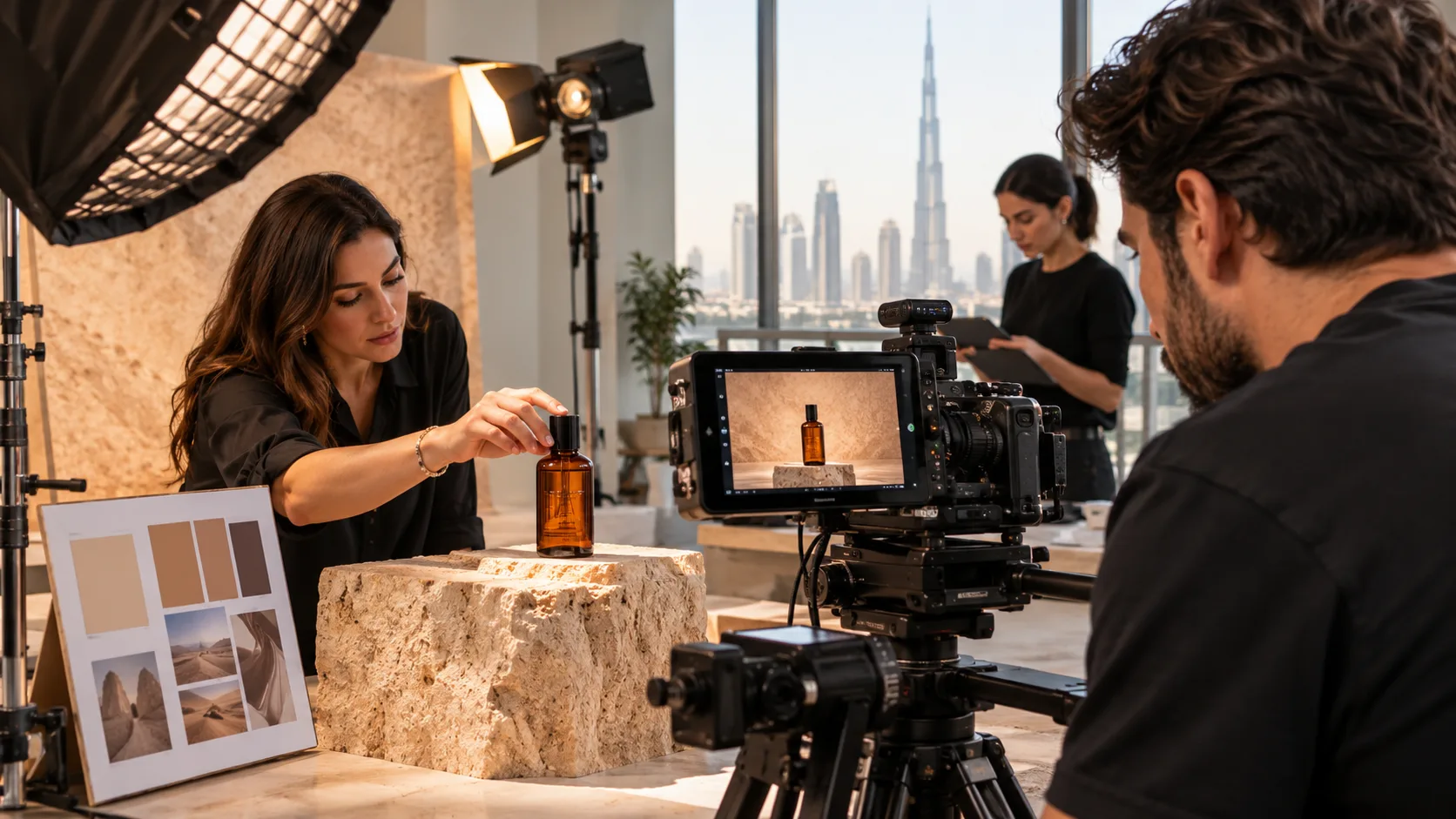
Step 4: Test High-Risk Scenes Early
If the video depends on complex product interactions, character consistency, accurate movement, or recognisable subjects, evaluate those requirements before committing to a fully AI-generated workflow.
A short prototype can help reveal whether the proposed visual method is suitable.
Step 5: Compare Complete Production Proposals
Request an estimate based on the agreed brief and compare what each production method includes.
Confirm the editing work, review rounds, usage rights, delivery formats, and responsibilities for corrections or additional production.
Step 6: Review the Final Video Before Publishing
Check the completed video for accuracy, coherent storytelling, appropriate representation, visual continuity, audio quality, and brand consistency.
Keep a clear approval process for any content that will represent the business publicly.
Common AI Video Production Mistakes to Avoid
Generative video can produce compelling imagery, but creative teams should avoid treating a visually impressive clip as automatically suitable for a commercial campaign.
- Using AI for every scene: Some content requires actual people, places, or products.
- Ignoring product accuracy: Generated packaging and physical details may differ from reality.
- Overlooking visual continuity: Characters, objects, and environments can change between generated shots.
- Skipping human editing: Professional storytelling involves pacing, sound, direction, and careful scene selection.
- Assuming lower costs: Complex generation, corrections, and revisions can increase production effort.
- Ignoring rights and permissions: Commercial usage may require permission to use voices, likenesses, and other assets.
- Choosing novelty over purpose: The production method should support the marketing message rather than distract from it.
Frequently Asked Questions About AI Video in Dubai
Can AI Completely Replace a Video Shoot in Dubai?
AI can replace filming for some conceptual, animated, or synthetic video projects. However, productions that must accurately show real people, products, events, or locations may still require genuine footage.
Is AI Video Production Cheaper Than Traditional Filming?
It depends on the project. AI may reduce certain physical production requirements, but generation, editing, visual corrections, licensing, and revisions still have costs. Compare complete proposals for the same deliverables.
What Types of Videos Can Be Created With AI?
AI video can support conceptual advertisements, stylised brand stories, creative social media reels, animated explainers, and campaign prototypes. The suitability of each approach depends on the brief and the tools available.
Can AI Videos Be Used for Commercial Advertising?
Potentially, yes. Before publishing, verify the relevant tool’s commercial-use terms, rights to source materials, permissions for identifiable people or voices, and any applicable advertising requirements.
Can AI and Real Video Footage Be Combined?
Yes. Hybrid production combines actual footage with suitable AI-generated or enhanced visuals. This can help brands retain authentic details while introducing more imaginative scenes.
Do Businesses Need a Filming Permit in Dubai?
Some commercial productions require filming permits and location approvals. Requirements vary according to the activity, location, and production arrangements. Check current guidance from the relevant authorities before filming.
Is AI Video Suitable for Product Advertising?
AI can help create conceptual product advertising, but real product details must remain accurate. For demonstrations or campaigns requiring precise packaging, materials, proportions, and functionality, actual product footage may be more reliable.
Conclusion: Should Your Brand Choose AI Video or a Real Shoot?
AI video in Dubai offers brands new ways to develop imaginative visual campaigns, explore creative ideas, and produce selected types of marketing content.
However, it is not a universal substitute for professional videography. When authenticity, product accuracy, genuine people, or real locations are central to the message, filming remains valuable.
For many businesses, a well-planned hybrid approach can bring together the strengths of real footage and AI-generated visuals.
At Bargojet Studio, we work across AI-powered content creation, professional videography, and digital advertising. The right production approach begins with understanding your brand, audience, and project requirements.
Planning a video campaign in Dubai? Contact Bargojet Studio to discuss your creative brief and explore an AI-led, filmed, or hybrid production approach.